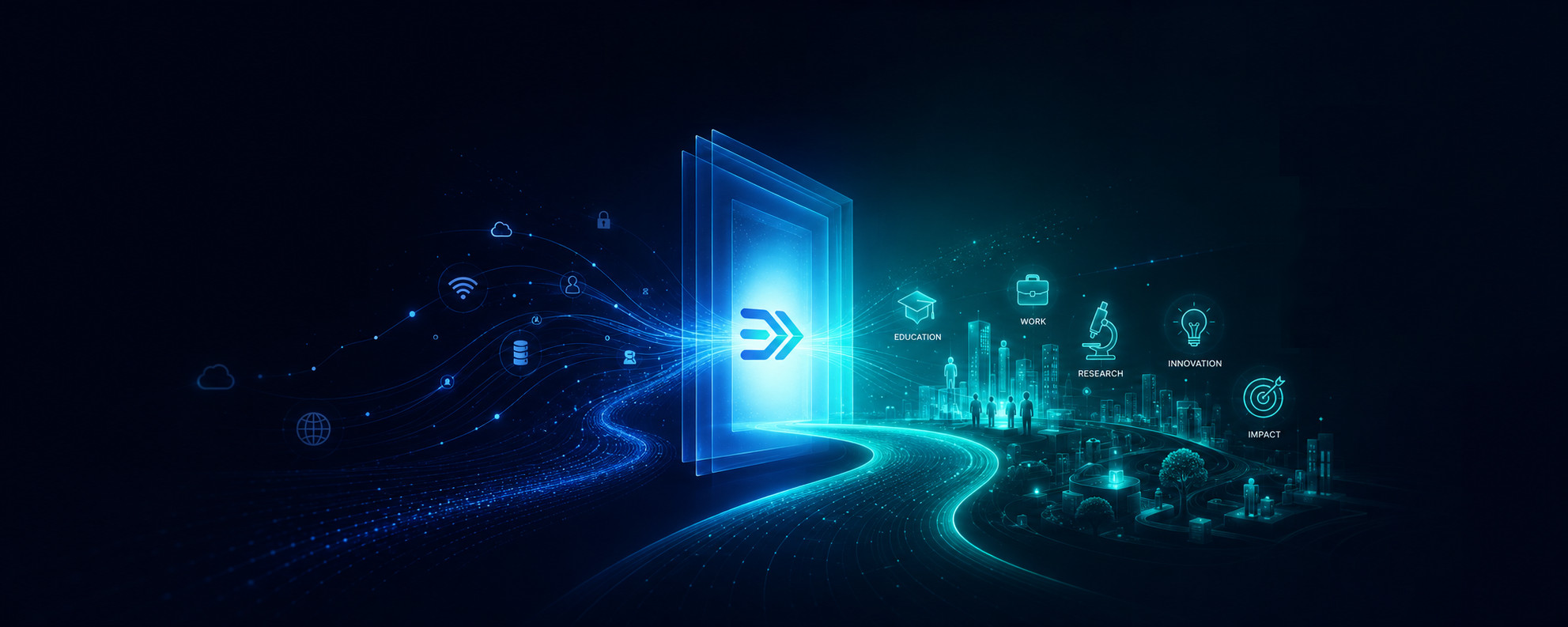
IntentNet is Myxify's foundational technology for creating purpose-built
digital environments aligned with organizational intent, operational
objectives, and real-world outcomes.
The internet solved connectivity. Modern organizations need alignment.
For decades, digital infrastructure focused on a straightforward
challenge: connecting people to information, applications, and
services. Identity systems verified users. Networks connected them.
Security controls protected access.
These layers remain essential and continue to solve important
problems. However, as organizations became increasingly dependent on
cloud platforms, AI systems, research resources, digital services, and
distributed teams, a new challenge emerged. The question is no longer
simply: "Can a user connect?" The question is: "Does access remain aligned with the purpose it was intended to serve?"
Alignment means ensuring users, resources, approvals, policies, and
outcomes remain connected to the purpose they are intended to serve.
IntentNet introduces a new layer focused on alignment. Instead of
organizing access around destinations, IntentNet organizes
environments around objectives. Users, resources, approvals, policies,
and workflows are aligned with a specific purpose, allowing access
models to evolve without losing organizational intent.
From Destination-Based Access To Purpose-Based Access
Traditional
User
Internet
Applications
Websites
Services
Access
Question: "Where can the user go?"
Manage destinations
->
IntentNet
User
Intent
Environment
Resources
Outcomes
Question: "What is the user trying to accomplish?"
Manage environments
What Changes?
IntentNet does not replace identity, networking, or security. It
introduces an additional layer that connects access decisions to
organizational objectives.
Traditional systems manage destinations.IntentNet manages environments.Traditional systems focus on connectivity.IntentNet focuses on outcomes.Traditional systems answer: "Where can the user go?"IntentNet answers: "What is the user trying to accomplish?"
How IntentNet Fits Existing Architecture
IntentNet was designed to work with the infrastructure organizations
already have. Identity systems continue to verify users. Security
controls continue to protect access. Networks continue to provide
connectivity.
IntentNet introduces an additional layer focused on alignment. Instead
of managing access as a collection of isolated destinations, policies,
and approvals, IntentNet organizes users, resources, workflows, and
governance into purpose-built environments.
Each environment can contain its own objectives, policies, approval
models, resources, and visibility requirements while continuing to rely
on existing identity and security infrastructure.
The result is not a replacement for existing architecture, but a
framework that connects users, resources, and outcomes around a shared
purpose.
Intent Creates Environments
Different objectives require different environments. Intent determines
what should be accessible.
Different objectives require different environments. Students,
researchers, employees, operators, and public-service teams often need
access to different resources, operate under different policies, and
pursue different outcomes.
Traditional access models frequently attempt to manage these
differences through increasingly complex rules, allow-lists, and
exceptions. IntentNet takes a different approach.
Instead of placing everyone inside the same digital environment,
organizations can create purpose-built environments aligned with
specific objectives. Each environment can contain its own resources,
policies, approval models, visibility requirements, and success
criteria while remaining connected to the same organizational
framework.
The goal is not to restrict access for its own sake. The goal is to
create environments where access naturally supports the intended
outcome.
Traditional visibility focuses on traffic, logs, and monitoring.
IntentNet focuses on understanding how environments are being used,
whether objectives are being achieved, where users need additional
resources, and how environments should evolve.
The goal is not surveillance. The goal is continuous improvement.
Access Activity What's happening->Understanding Why it matters->Insight What we learn->Improvement What we enhance
Example Insights
Which resources are most valuable?
Which resources are frequently requested?
Which environments are underutilized?
Which approval workflows create delays?
Which new resources should be added?
Which environments are producing the best outcomes?
Bringing It All Together
IntentNet is not a VPN, firewall, proxy, identity system, or analytics
platform. It is a framework for organizing digital environments around
purpose.
As organizations become more dependent on AI systems, cloud platforms,
research resources, distributed teams, and digital services, complexity
increases. IntentNet introduces a purpose-alignment layer that
transforms that complexity into purpose-built environments connected to
measurable outcomes.
The IntentNet Model
Organizations do not need more disconnected controls. They need a way
to align people, resources, policies, approvals, and visibility around
shared objectives.
IntentNet organizes them into environments that evolve with
organizational needs while preserving intent.
Why IntentNet Is Different
VPN
How can users connect?
Firewall
Should traffic pass?
Proxy
How should requests be routed?
Zero Trust
Should identity be trusted?
Secure Web Gateway
Is destination allowed?
IntentNet
What should people accomplish?
Platform Applications
One foundation. Many expressions.
EduNet Education Internet
->
WorkNet Work Internet
->
Research Research Environments
->
AI Environments AI Ecosystems
->
Government Public Sector
->
Critical Infrastructure Operational Systems
->
Custom Environments Purpose Built
EduNet and WorkNet are examples. IntentNet is the foundation.
Connectivity Was The First Chapter.
It connected the world, unlocked access, and made information available.
Purpose Is The Next.
We align access with intent to create environments that drive real-world
outcomes.
One Foundation. Many Environments.
IntentNet is Myxify's foundational technology. EduNet and WorkNet are examples of how purpose-built environments can be created around specific objectives. The same foundation can support research, operations, AI ecosystems, public services, and custom environments.

 IntentNet